

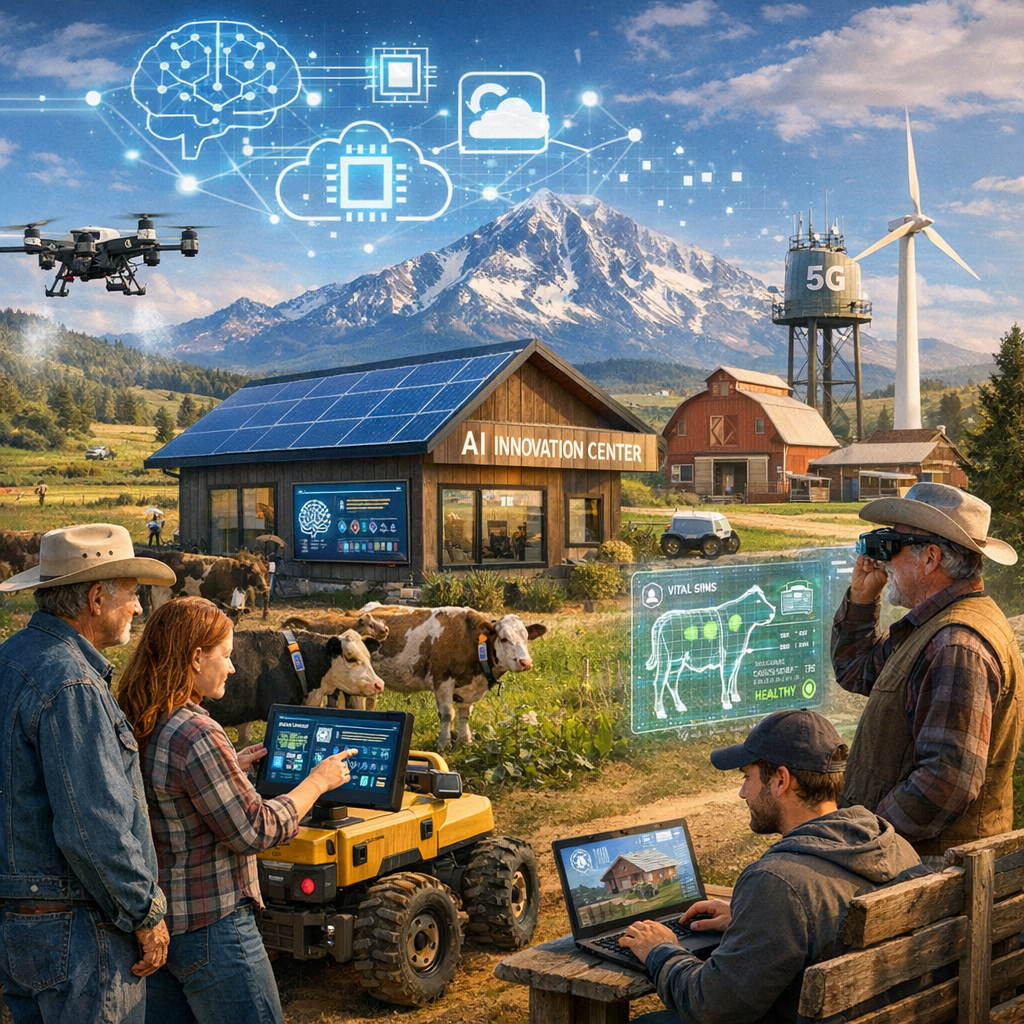
In the heart of Colorado’s rural landscapes, a technological transformation is underway. Artificial Intelligence (AI) and tech startups are not only reshaping urban centers but are also making significant inroads into rural communities, offering new opportunities and addressing longstanding challenges.
AI Adoption in Rural Areas
Recent studies highlight a growing disparity in AI adoption between urban and rural regions. While urban areas see nearly one-third of residents utilizing AI technologies, only 16.2% of rural inhabitants report similar usage. This digital gap poses a risk of exacerbating existing economic inequalities. However, AI holds the potential to bridge these divides by enhancing access to critical services such as healthcare and education.
Tech Startups Making an Impact
Colorado’s tech ecosystem is vibrant, with numerous startups focusing on AI and related technologies. For instance, Boulder-based Ridley has developed an AI-driven platform aimed at revolutionizing the home-selling process, enabling homeowners to navigate sales without traditional real estate agents. Such innovations demonstrate the potential for AI to streamline processes and reduce costs, benefiting both urban and rural residents.
Challenges in Education
Integrating AI into educational settings presents both opportunities and challenges. A high school in Colorado Springs recently paused its use of an AI model due to concerns about safety and effectiveness. This incident underscores the need for careful consideration and adaptation when introducing new technologies into educational environments, especially in rural areas where resources may be limited.
Legislative Efforts and Infrastructure Development
Recognizing the transformative potential of AI, Colorado lawmakers have introduced new legislation to regulate AI-driven decision-making in critical sectors. This proactive approach aims to balance consumer protection with fostering innovation. Additionally, efforts to improve rural broadband access are crucial, as reliable internet connectivity is foundational for the successful implementation of AI technologies in these communities.
Looking Ahead
As AI continues to evolve, its integration into rural Colorado holds promise for economic growth and improved quality of life. By addressing infrastructure challenges and ensuring inclusive adoption, rural communities can harness the benefits of AI, reducing disparities and fostering a more connected and prosperous future.