

By Madison Gomez
Nestled in the high mountain valley of South Park, Como feels like a quiet echo of its roaring railroad past. What remains is a handful of stone walls, a depot, and a once-thriving roundhouse—remnants of a coal and rail town that once pulsed with the sound of steam engines. But today, amidst the vast Colorado sky, that roundhouse is doing more than holding history—it’s helping us hold on.
A Source of Connection
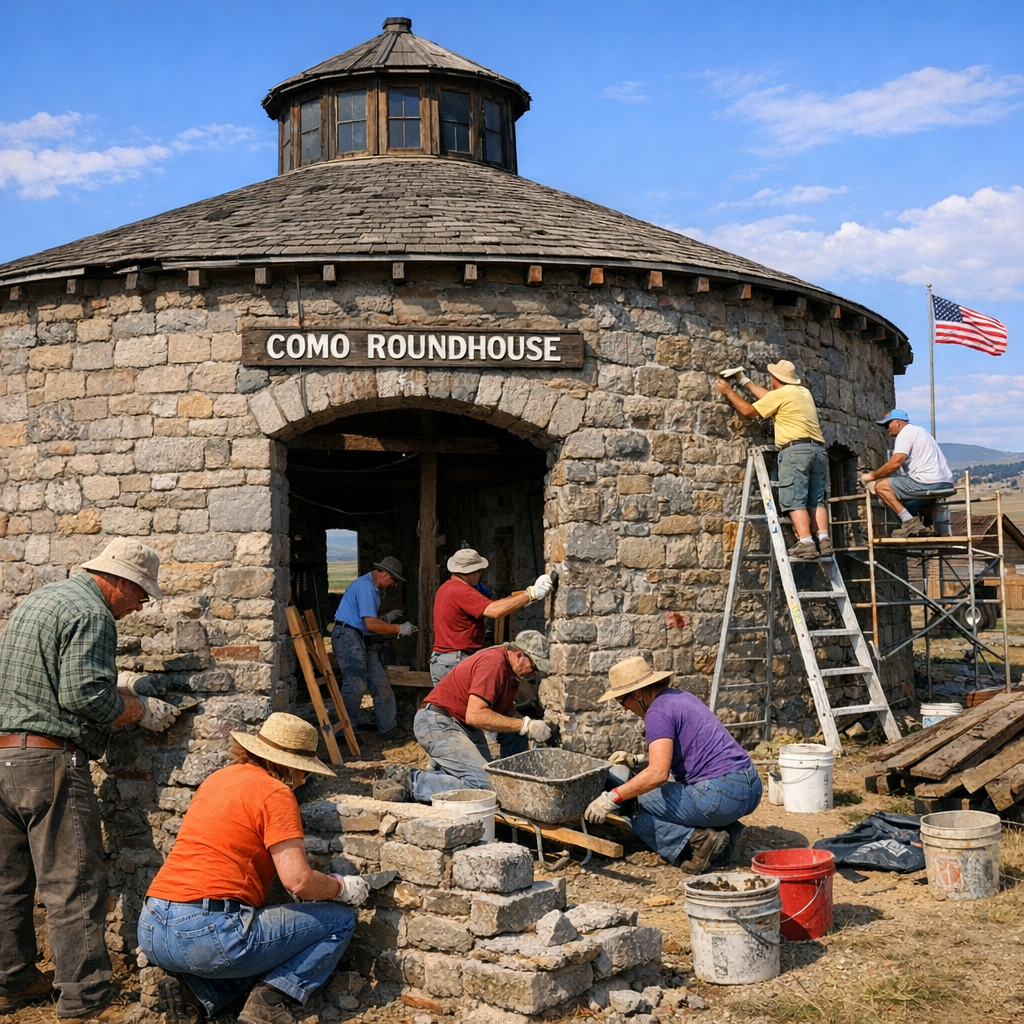
I grew up hearing stories about the Denver, South Park & Pacific Railroad cutting tracks over Kenosha and Boreas passes, steam locomotives chugging through, miners treading dusty paths from the coal camps. From a distance, this history seemed like something out of a western novel—until, a few years ago, I worked alongside neighbors hammering boards and lifting beams at the roundhouse.
That weekend rhythm—tools clinking, wood splintering, laughter drifting between walls—started to stitch together something that time and isolation had frayed. Around me were people who lived here full-time and those who made the trip from towns far beyond our snowy ridges, drawn by the idea that preserving these structures preserves stories. In restoring the roundhouse, we weren’t just keeping up mortar and wood—we were keeping our voices alive.
Revival Through Restoration
The Como Heritage Project, a grass-roots group formed by rail buffs, local historians, families just wanting to belong, has driven this revival. With funds from grants and matching support, they’re rescuing what many saw as salvageable, breathing life into broken windows and eroded stone. What once appeared derelict is now a project filled with labor, planning, and shared ambition.
But it’s not only about fixing roof beams and doors. It’s about belief—that a community is more than a population count. Officially, ‘Como proper’ has just a dozen or less permanent residents, though the wider ZIP code draws hundreds. Still, many of our neighbors feel invisible. We’re not along a major highway, we’re not “on the map” for many visitors, and colder months can feel like we’ve been forgotten.
The Roundhouse As Symbol
When I see the roundhouse slowly take shape—stone by stone, timber by timber—I see something that pushes back against that invisibility. It says we were here; that our past was more than a footnote. It suggests that in this cold, high place, there are people sharp-eyed enough to notice cracks—and kind enough to mend them.
What the heritage project offers is something many of us dearly missed: a sense that this place matters. It matters to historians, for sure, but more so to kids who run past the depot, to teachers who teach local lore, to elders whose memories ripple through our evening gatherings. Restoration brings something durable—a future where people say, “I belong,” not just “I passed through.”
Lessons From This Labor
- Restoration doesn’t need perfection—it needs participants. Our group includes retirees, teens, and everyone in between; the mix matters.
- When we share the work, we share the story. Oral history nights at the depot—about miners, trains, winters—anchor our restoration in memory.
- Small wins build momentum. One window pane, one patched roof, one fresh coat of paint—they draw more help, more hope.
Como may have been labeled a “living ghost town,” but in our weekend workdays, shared meals, and rising sun on stone facades, I see ghosts becoming more than echoes. I see a voice. I see a future.
To those who read this: if you live in or around Como, come lend a hand. Dust off your memories and share your stories. We’re not restoring wood alone—we’re restoring belonging.